For decades, energy decisions sat largely within facilities and engineering teams. The goal was simple. Keep buildings comfortable, operations running and costs under control.
That has changed.
Today’s energy decisions influence capital investment, grid capacity, carbon targets, operational resilience and long-term financial exposure. They now belong in the boardroom. These decisions are usually well considered. They are supported by data, consultants and extensive internal review. The hidden risk is rarely poor judgement.
It is whether leaders ever saw the full range of long-term options before making the decision.
Choosing the known
In complex organisations, decisions naturally favour proven technologies and familiar approaches. Especially where operations cannot tolerate failure. The board may rigorously evaluate every proposal. But if earlier assumptions have already narrowed the available options, the decision is constrained before it reaches the boardroom.
Existing systems are extended. Additional layers are added. Performance improves incrementally. Each decision is reasonable on its own. Together, however, they can lock organisations into decades of exposure to volatile energy markets, grid constraints and rising operational risk.
When risk accumulates
Energy infrastructure is rarely designed once. It evolves through capital cycles, operational demands and changing regulations. What begins as a temporary solution often becomes permanent. Over time, organisations inherit instability rather than deliberately choosing it.
For businesses where uptime is critical, energy is not simply a utility cost. It is core infrastructure.
Stabilising rather than optimising
Energy is often treated as something to optimise. Increasingly, it should be viewed as something to stabilise.
Geothermal changes the conversation.
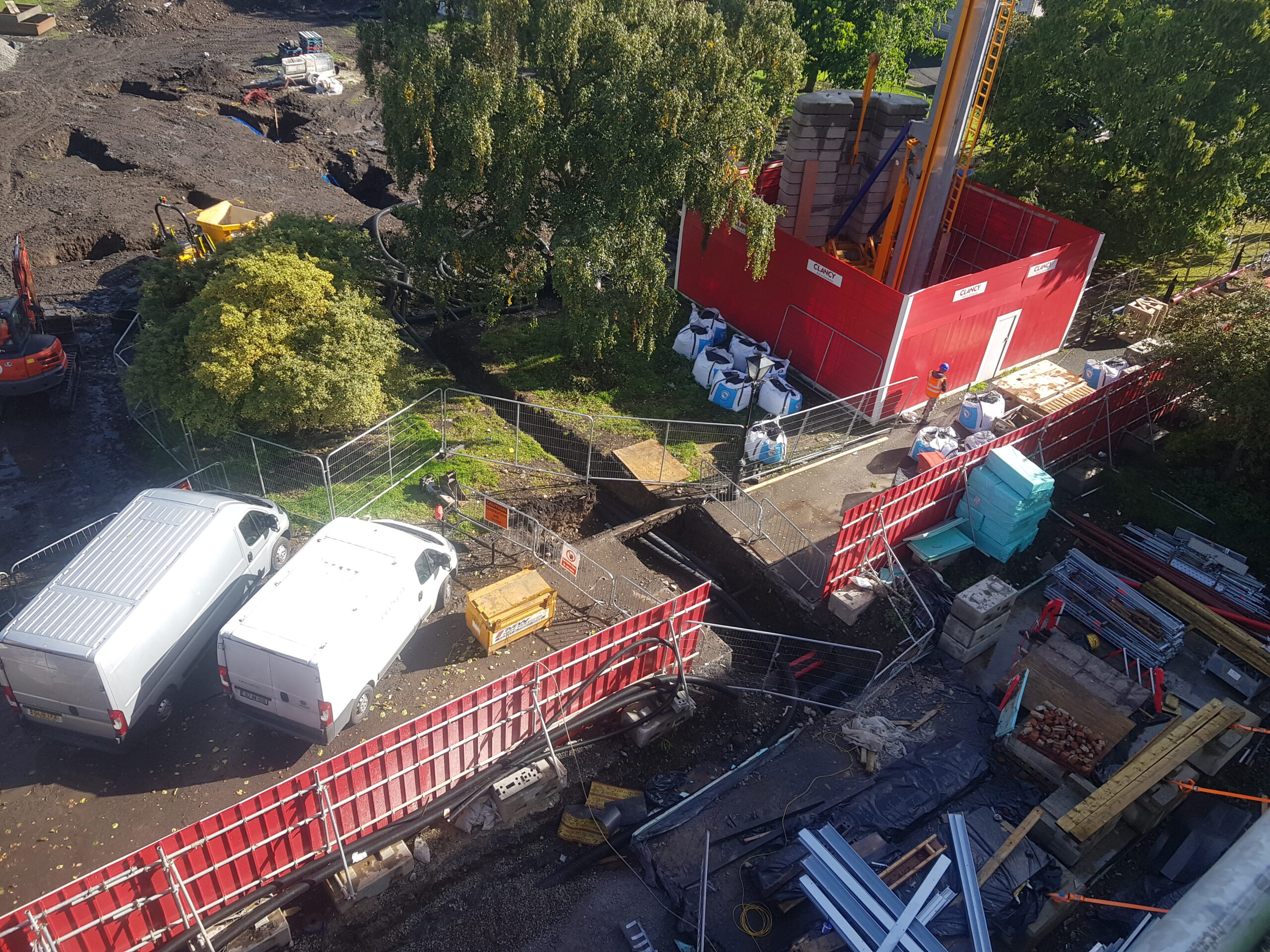
Rather than focusing on short-term savings, it asks what energy infrastructure must reliably deliver over the next fifty years. Stable underground temperatures provide predictable performance with minimal exposure to fuel price volatility and grid pressure. For hospitals, pharmaceutical manufacturing, data centres and other mission-critical facilities, that stability directly supports operational resilience.
Continuity as strategy
Choosing geothermal is not primarily about innovation. It is about reducing uncertainty and building energy infrastructure that quietly performs for decades.
The strongest long-term decisions often attract the least attention because they remove variables instead of introducing them. The hidden risk in energy decision-making is not a lack of careful thinking. It is making a series of sensible decisions without ever seeing the full range of long-term possibilities.
The real question for leaders is not whether today’s decision is well reasoned. It is whether the right options reached the table in the first place.