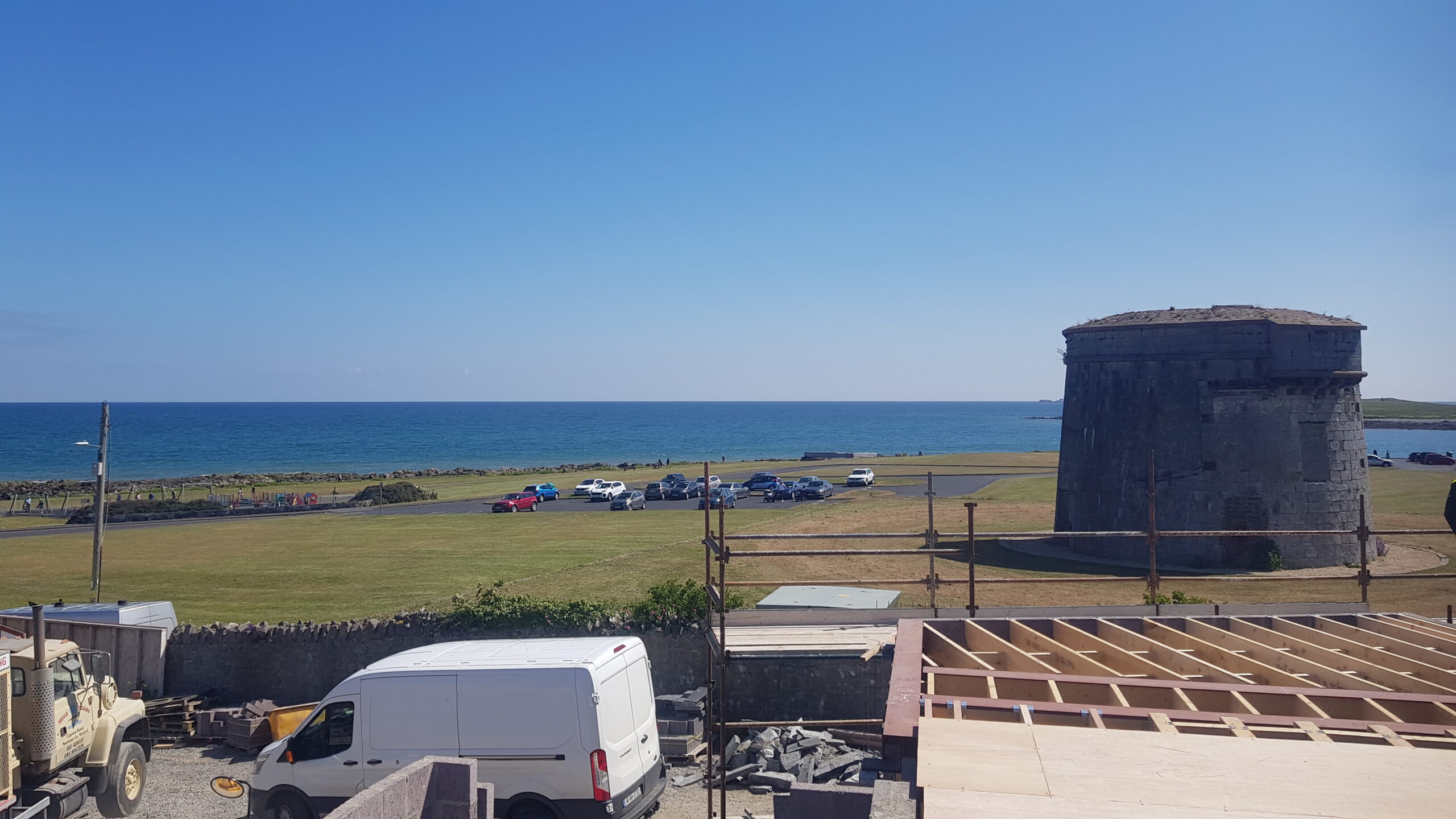
Borehole drilling is often seen as a barrier to geothermal energy. Concerns usually centre on space, access, and disruption. This is especially true in urban or constrained sites.
But in practice, these concerns are often overstated.
Geothermal boreholes take up very little permanent space. Most of the work happens below ground. With the right planning, drilling can be integrated into both new-build and retrofit programmes with minimal impact.
What borehole drilling actually involves
Geothermal boreholes are typically around 150 millimetres in diameter and drilled to depths of 150 to 250 metres. Pipework is installed and connected underground to form an open- or closed-loop system. Once drilling is complete, the surface is returned to its original condition, with no visible infrastructure left behind.
The drilling phase is temporary.
A typical drilling rig needs about a 10 by 10 metre working area while drilling is underway. This allows room for the rig itself, the crew, and the pipework. Up to 5 metres of clear height is also needed, so trees, overhead cables, or nearby structures should be checked early. But even in the most constrained sites, solutions can often be found.
Working on constrained and retrofit sites
Geothermal boreholes do not necessarily need large open land. They can be installed beneath roads, car parks, courtyards, and landscaped areas. The same approach works for retrofit. Boreholes can be positioned under existing external areas without disrupting building operations.
When planned properly, drilling runs alongside other site activities. If if coordinated correctly, it does not need to delay or interfere with the day-to-day operations.
Why this matters
The main barrier to geothermal is rarely space. If anything, it’s a late consideration. When boreholes are planned early, layouts can be optimised, access simplified, and cost controlled.
The limitation is often a matter of perception, not feasibility.