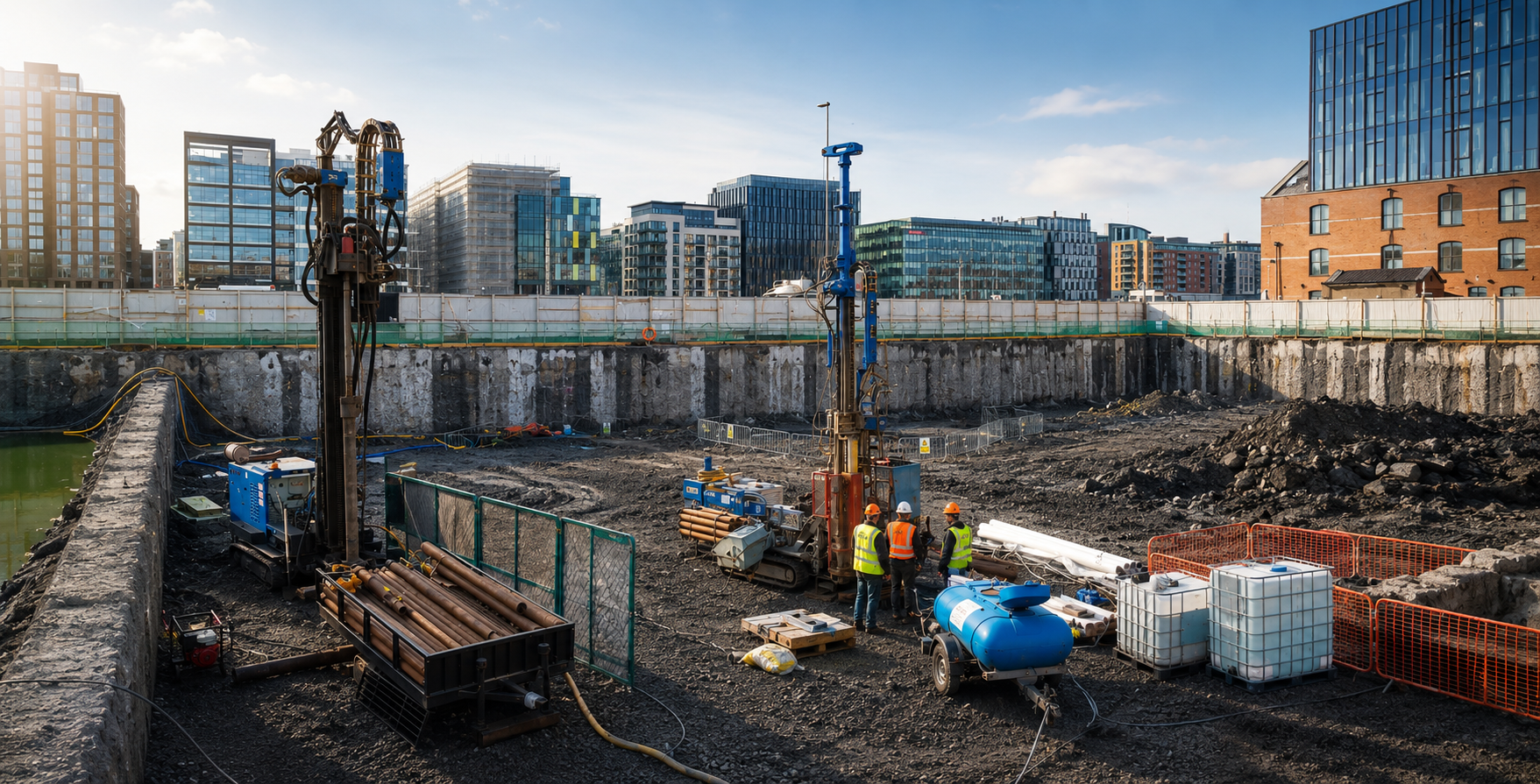
We’ve become used to financing heating systems. But Geoenergy isn’t just another heating system. It’s infrastructure.
That distinction changes the financial conversation.
Most projects are still assessed against the initial capital budget. The cheapest option today often wins, even if it creates higher operating costs, earlier replacement and greater energy risk over the next 30 years.
Geoenergy doesn’t fit neatly into that model.
The wrong financial model
Its value isn’t delivered during construction. It’s realised over decades through lower operating costs, stable performance, improved resilience and infrastructure that continues supporting the building long after plant has been replaced.
The challenge isn’t always the cost. It’s the investment horizon.
When underground energy infrastructure is expected to compete with equipment designed for a 15 to 20-year life, we’re comparing two fundamentally different assets.
Financing infrastructure, not equipment
A better question is: “Who benefits from decades of lower operating costs, reduced energy risk and long-term resilience, and how should that infrastructure be financed? “
Once the conversation shifts, so do the funding options. The building owner may choose to invest directly. Or a specialist infrastructure investor, utility or energy provider could finance, own and operate the underground asset while the customer purchases heating and cooling through a long-term service agreement.
The capital doesn’t disappear. It simply moves to an organisation whose investment horizon matches the life of the asset.
The next step
That’s where concepts such as Geoenergy as a Service become interesting. But finance only follows confidence. Investors need reliable demand forecasts, robust site investigation, well-designed projects and repeatable delivery models.
Ireland doesn’t lack opportunity.
It needs a pipeline of investable geoenergy projects.
That’s one of the key discussions at the EGEC and Geothermal Association of Ireland workshop in Dublin this September. Because if geoenergy is infrastructure, it deserves to be financed like infrastructure.