Category: blog

  • Why energy independence matters more than efficiency 

    Why energy independence matters more than efficiency 

    Efficiency is reassuring. It suggests progress. It signals discipline. It makes systems look under control. But efficiency does not equal security. 

    An energy system can be highly efficient and still deeply exposed. Efficient systems still rely on external supply, market pricing, and infrastructure that sits outside organisational control. 

    Efficiency optimises, but dependency remains 

    Most efficiency gains improve performance within a given framework. They reduce waste and lower consumption. But what they do not change is dependency. 

    In continuous operations, dependency is the real risk. When systems rely on external markets, volatility is inherited by default. Price spikes, grid constraints, and policy shifts become operational variables. 

    Efficiency cannot remove that exposure. It can only help manage the risks. 

    When markets become operational risk 

    External energy markets are not designed for continuity. They respond to supply and demand, not uptime requirements. For  organisations that cannot pause, this creates structural tension. Energy availability becomes a question mark.   

    This is not a failure of efficiency. It is a consequence of dependence. 

    Energy independence on the other hand, alters the risk profile. It replaces market exposure with physical certainty. Independent systems behave differently under stress. They narrow uncertainty, stabilise inputs and reduce the number of external factors that can disrupt operations. Offering real operational value. 

    Geothermal as structural control 

    Geothermal provides control at the source. Energy is drawn from stable subsurface conditions, making sure that outputs remain consistent. Performance is decoupled from weather and markets, with long-term reliability designed into the system itself. 

    For continuous operations, this is not a sustainability argument. It is a control mechanism. Efficiency still matters, but control matters more. 

    Energy independence is not about isolation. It is about deciding which risks are acceptable, and which should never have been there at all. 
  • Validation risk often starts with energy 

    Validation risk often starts with energy 

    In regulated environments, validation is treated as a technical exercise. Protocols. Documentation. Controls. What is often overlooked is the role of energy behaviour underneath those controls.  

    Temperature instability does not announce itself as an energy problem. It appears as a drift. Deviations. Rework. Extra monitoring. Investigations that consume time and attention. Energy systems that fluctuate create validation work. Even when they stay within tolerance, they increase the oversight load. 

    When control systems have to compensate 

    Many heating and cooling systems rely on active correction. Controls must work harder when external conditions shift, and seasonal changes introduce variability that must be managed. 

    That management effort becomes part of daily operations. Teams compensate without always naming the cause. 

    Geothermal changes this dynamic by reducing the need for correction in the first place. Subsurface temperatures are stable. Heating and cooling output remain consistent. The system does not chase conditions above ground. That stability supports validation instead of testing it 

    Less effort, more control 

    A stable thermal backbone reduces intervention. It does not reduce oversight. It reduces exceptions. When energy behaves predictably, control systems operate within narrower bands. Fewer alarms, fewer adjustments, and fewer investigations triggered by temperature behaviour. 

    That has a direct operational impact. Less time spent maintaining compliance. More confidence in baseline performance. 

    Geothermal is not a bolt-on solution. It is engineered around load profiles, process demands, and continuous operation. For regulated sites, that matters. Validation risk does not sit only in procedures. It sits in the systems that those procedures rely on. 

    Stabilising energy reduces that risk at the source. 

  • From waste to asset. How data centre heat can support cities 

    From waste to asset. How data centre heat can support cities 

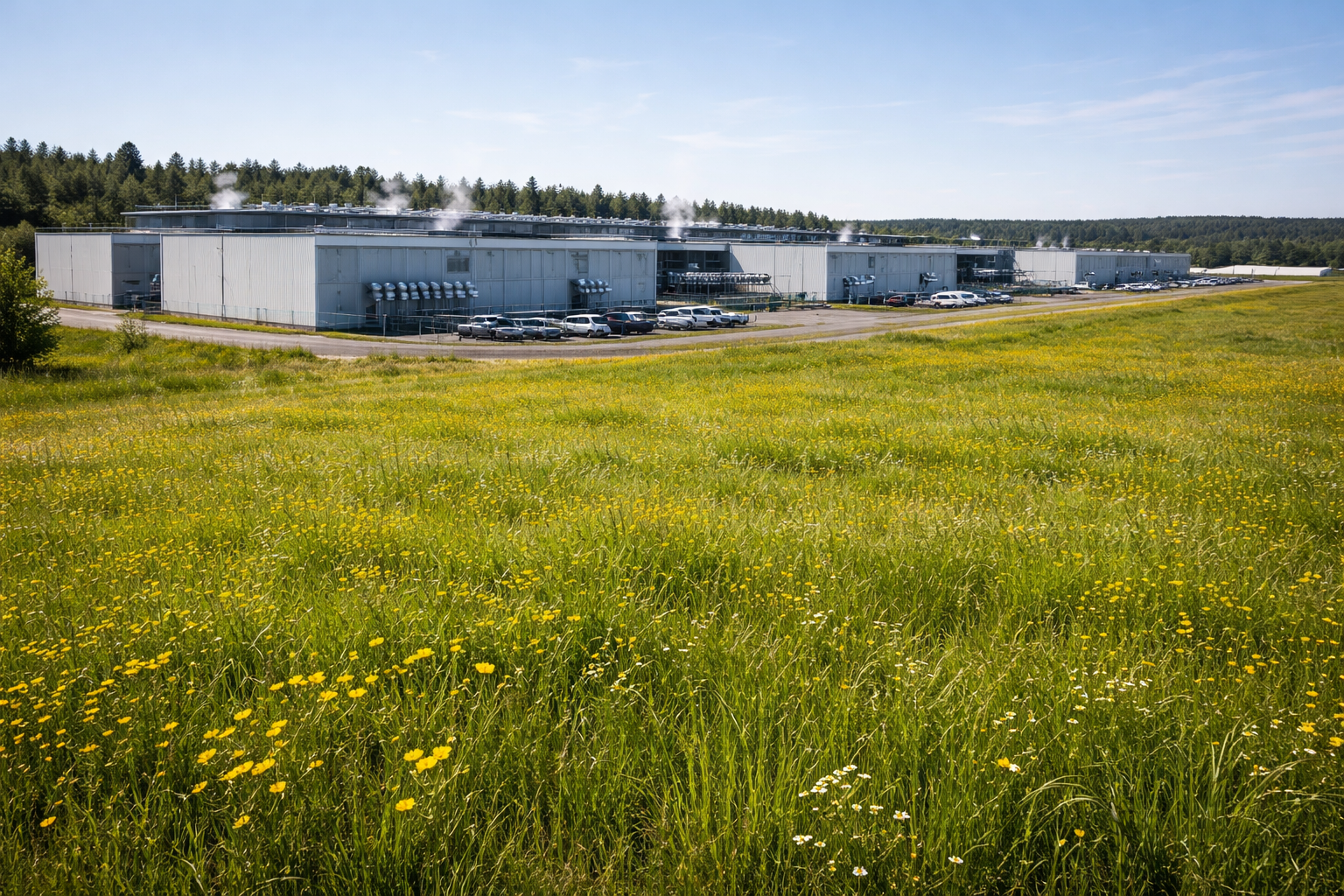
    Data centres are under pressure. Energy demand continues to rise, grid capacity is tightening, and planning consent is increasingly difficult to secure. Decarbonising these facilities can feel like an impossible task. 

    Yet every data centre produces a steady stream of waste heat. Today, most of it is vented into the air and forgotten. With the right system design, that heat can be captured and reused as a stable, low-carbon energy source. 

    Waste heat only works when systems are designed together 

    Recovered heat from data centres is low temperature and not directly usable. It needs upgrading, balancing, and a clear route to demand. Adding a geothermal system changes what is possible. 

    Ground source heat pumps raise waste heat to temperatures suitable for space heating and hot water. Ground-based thermal storage absorbs excess heat when demand is low and releases it when demand rises. When this energy is distributed through district heat networks, waste heat becomes part of a permanent heating infrastructure for homes and businesses. 

    This is already happening 

    Projects in London and Dublin show what works. Waste heat from data centres is recovered, upgraded using heat pumps, and distributed through district networks. These schemes succeed because the energy system is designed as a whole, linking the data centre, the ground, and end users from the outset. 

    Across Europe, many data centres sit close to dense heat demand. The real constraint is not opportunity. It is timing and coordination during planning and design. 

    Why this matters for data centre operators 

    Heat recovery changes the risk profile of a data centre. It strengthens planning cases, reduces long-term carbon exposure, and aligns assets with heat policy and public funding. 

    Most importantly, it avoids locking in assets that will look outdated as heat decarbonisation accelerates. 

    Data centre capacity will continue to grow, and pressure on heat emissions will continue to rise. Operators face a clear choice. They can build isolated energy loads or design data centres as part of permanent local energy systems. 

  • Why geothermal heat will shape Ireland’s next building cycle 

    Why geothermal heat will shape Ireland’s next building cycle 

    Ireland’s move away from fossil heating is accelerating. New developments are already subject to strict NetZero energy standards, and existing assets are next. Electrification is unavoidable, so the real decision is about infrastructure that lasts. Geothermal heat systems offer a long-term solution for both new-build and retrofit projects. The technology is mature. The benefits are structural. The question is no longer whether it works, but when it is built in. 

    The case for installing geothermal early in the asset lifecycle 

    In new developments, geothermal works best when designed in from the start of any project. Boreholes or ground loops sit beneath the site. They do not compete with surface space. They remain invisible once installed. The result is stable, low-temperature heat and free cooling for decades, without future disruption. 

    In retrofit projects, the same logic applies. Geothermal systems installed at existing sites avoid reliance on exposed external units and reduce sensitivity to air temperature swings. Performance stays consistent year after year with lower maintenance costs. Operating risk and costs drop due predictable and long term performance. Grid dependency becomes a significantly lower risk due to the higher efficiencies. 

    Both of these matters for assets expected to perform over long lifecycles. 

    Planning, compliance, and operating risk 

    Geothermal systems align with Ireland’s targets to decarbonise heating and cooling. They support the reduction of grid strain by delivering low primary energy demand and predictable emissions performance. Adopting geothermal early on, future proof buildings by avoiding the need for repeated redesign as standards tighten. 

    Planning authorities also consider noise, visual impact, and grid impact. Geothermal systems reduce all three. Centralised heat production smooths electrical demand and simplifies site design. In practice, this often leads to fewer objections and more predictable planning outcomes. 

    Why timing still matters 

    Geothermal heat delivers stable efficiency because ground temperatures do not fluctuate. That leads to predictable running costs and quieter operation, for both occupants and operators. Similar to the decarbonisation efforts, funding and ownership models continue to evolve. Heat network investors increasingly back geothermal because it is durable, adaptable, and low risk over time.  

    A one-off investment that results in decades of reliable heating and cooling. 

    Every asset, planned or existing, will face this transition. The real choice is whether geothermal is integrated deliberately or forced in later under tighter constraints. 

  • How winter truly tests our energy strategies

    How winter truly tests our energy strategies

    Winter has a way of revealing how resilient a sustainability solution really is. Demand rises. External conditions harden. Systems are asked to perform without compromise.

    This is when strategic decisions show their consequences, not in theory, but in lived operational reality. Energy assumptions that seemed reasonable in mild conditions are tested under sustained pressure. Some systems hold. Some strain. Some quietly fall apart.

    When systems stop being abstract

    Energy strategy often lives in plans, models, and long-term roadmaps. Winter pulls it into daily operations. Heating loads increase across estates. Production lines run harder. Data and digital infrastructure push constant demand. There is no room to slow down.

    In organisations that operate continuously, energy is not flexible. Hospitals cannot scale back warmth. Manufacturing cannot pause processes. Digital services cannot afford interruption. Reliability is not seasonal.

    The limits of weather-dependent solutions

    Systems that source heat from ambient air are often positioned as a clean, efficient solution.
    In moderate conditions, they can perform well. Their challenge appears when demand is highest and temperatures are lowest.

    As outside air cools, efficiency drops. Systems work harder to deliver the same output. Peak demand coincides with peak strain. What looked efficient in annual averages becomes variable in winter reality.

    This does not make air sourced systems wrong. It makes them conditional. Their performance depends on the very conditions winter removes.

    Stability behaves differently

    Systems designed for continuity respond differently to winter. They do not chase peaks.
    They absorb them.

    Geothermal is one example. Subsurface temperatures remain stable regardless of weather. Output stays predictable when air temperatures fluctuate. Performance is maintained meaning electrical consumption is optimised. Exposure to external volatility reduces at the moments it matters most.

    That stability creates space. Space to focus on growth, safety, and performance, rather than compensating for energy systems under stress.

    What winter really reveals

    Winter does not create weaknesses. It exposes design choices.

    It shows which strategies were built for average conditions, and which were built for the hardest months. In complex, continuous operations, that distinction is not philosophical. It is operational truth.