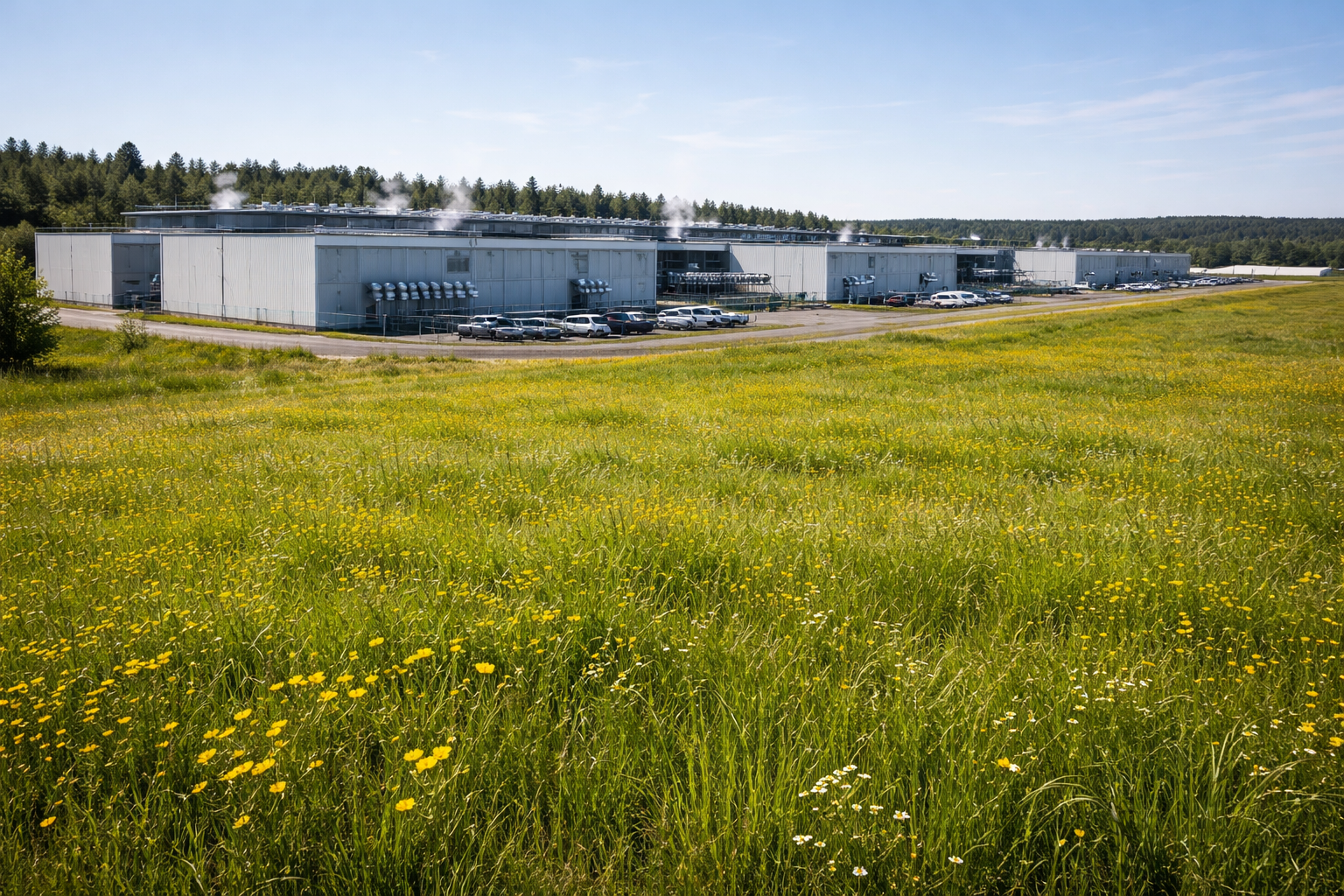
Data centres are under pressure. Energy demand continues to rise, grid capacity is tightening, and planning consent is increasingly difficult to secure. Decarbonising these facilities can feel like an impossible task.
Yet every data centre produces a steady stream of waste heat. Today, most of it is vented into the air and forgotten. With the right system design, that heat can be captured and reused as a stable, low-carbon energy source.
Waste heat only works when systems are designed together
Recovered heat from data centres is low temperature and not directly usable. It needs upgrading, balancing, and a clear route to demand. Adding a geothermal system changes what is possible.
Ground source heat pumps raise waste heat to temperatures suitable for space heating and hot water. Ground-based thermal storage absorbs excess heat when demand is low and releases it when demand rises. When this energy is distributed through district heat networks, waste heat becomes part of a permanent heating infrastructure for homes and businesses.
This is already happening
Projects in London and Dublin show what works. Waste heat from data centres is recovered, upgraded using heat pumps, and distributed through district networks. These schemes succeed because the energy system is designed as a whole, linking the data centre, the ground, and end users from the outset.
Across Europe, many data centres sit close to dense heat demand. The real constraint is not opportunity. It is timing and coordination during planning and design.
Why this matters for data centre operators
Heat recovery changes the risk profile of a data centre. It strengthens planning cases, reduces long-term carbon exposure, and aligns assets with heat policy and public funding.
Most importantly, it avoids locking in assets that will look outdated as heat decarbonisation accelerates.
Data centre capacity will continue to grow, and pressure on heat emissions will continue to rise. Operators face a clear choice. They can build isolated energy loads or design data centres as part of permanent local energy systems.