Ireland’s move away from fossil heating is accelerating. New developments are already subject to strict NetZero energy standards, and existing assets are next. Electrification is unavoidable, so the real decision is about infrastructure that lasts. Geothermal heat systems offer a long-term solution for both new-build and retrofit projects. The technology is mature. The benefits are structural. The question is no longer whether it works, but when it is built in.
The case for installing geothermal early in the asset lifecycle
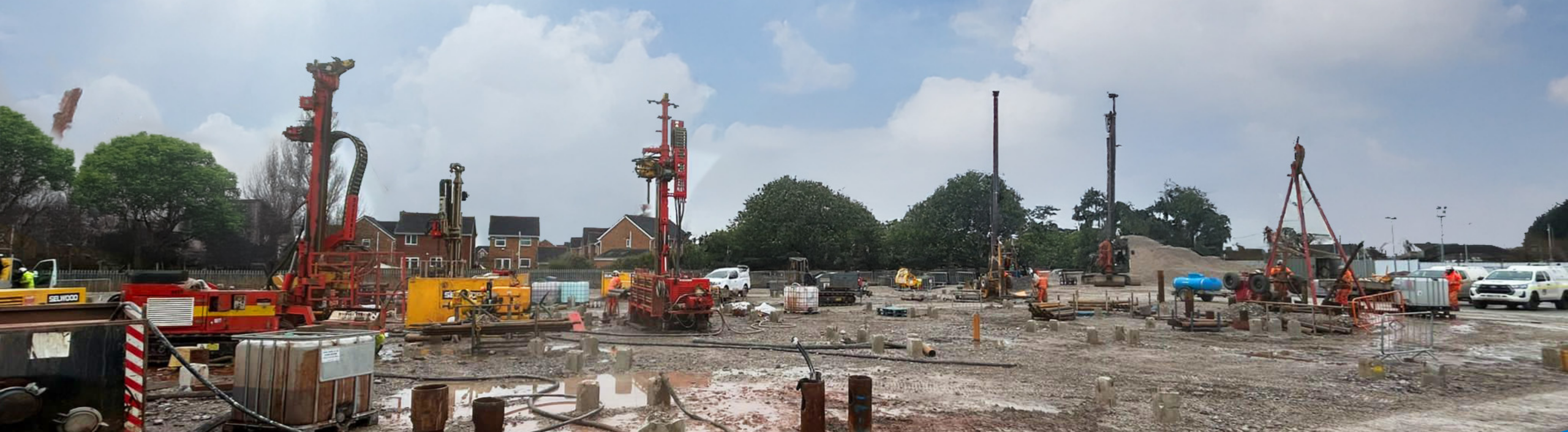
In new developments, geothermal works best when designed in from the start of any project. Boreholes or ground loops sit beneath the site. They do not compete with surface space. They remain invisible once installed. The result is stable, low-temperature heat and free cooling for decades, without future disruption.
In retrofit projects, the same logic applies. Geothermal systems installed at existing sites avoid reliance on exposed external units and reduce sensitivity to air temperature swings. Performance stays consistent year after year with lower maintenance costs. Operating risk and costs drop due predictable and long term performance. Grid dependency becomes a significantly lower risk due to the higher efficiencies.
Both of these matters for assets expected to perform over long lifecycles.
Planning, compliance, and operating risk
Geothermal systems align with Ireland’s targets to decarbonise heating and cooling. They support the reduction of grid strain by delivering low primary energy demand and predictable emissions performance. Adopting geothermal early on, future proof buildings by avoiding the need for repeated redesign as standards tighten.
Planning authorities also consider noise, visual impact, and grid impact. Geothermal systems reduce all three. Centralised heat production smooths electrical demand and simplifies site design. In practice, this often leads to fewer objections and more predictable planning outcomes.
Why timing still matters
Geothermal heat delivers stable efficiency because ground temperatures do not fluctuate. That leads to predictable running costs and quieter operation, for both occupants and operators. Similar to the decarbonisation efforts, funding and ownership models continue to evolve. Heat network investors increasingly back geothermal because it is durable, adaptable, and low risk over time.
A one-off investment that results in decades of reliable heating and cooling.
Every asset, planned or existing, will face this transition. The real choice is whether geothermal is integrated deliberately or forced in later under tighter constraints.
